Tuesday, 30 June 2015

Physicists shatter stubborn mystery of how glass forms

Scientists have described how glasses form at the molecular level and provided a possible solution to a problem that has stumped scientists for decades.

A Few More Awesome Examples of Cargotecture Done Right

Shipping container architecture is sweeping the world and capturing the imagination of individuals looking to build their home, business trying to revamp their headquarters, and everyone in between. Below you will find a few great examples of shipping container buildings designed in a way that is aesthetically pleasing, sustainable and functional.

1. Ingenious Shipping Container Office in Tokyo, Japan

tokiooffice

This office was built out of two standard-sized repurposed 40-foot shipping containers, which yielded almost 400 square feet of office and gallery space. The containers were cut up and placed back together in very interesting ways. To create the base of this building, a container was first cut into two halves, which were placed perpendicular to each other. This created two small rooms and a central courtyard. The second container was placed over the base and left pretty much in its original state. More details…

2. Casa El Tiemblo (Tiemblo House)

eltiemblo

This cool, modern residence was built from six recycled shipping containers and it is located in El Tiemblo, Ávila, Spain, as the name suggests. The shipping containers used were built in such a way as to maximize the interior space, and the finished house measures a sprawling 623 square feet. More details…

3. Artist Studio in Lisbon, Portugal

lisboa

The building of the Village Underground Lisboa complex is still underway and should open its door in May 2015. The entire structure will be made using 14 repurposed shipping containers, as well as two decommissioned double-decker buses. The containers used were pretty much left in their original state, and, once the building is completed, each will be equipped with five working tables, which will be available for rent by startups, artists, and other creatives. More details…

4. Snoozebox Hotel

snoozebox

This unique structure is actually a portable hotel, and what better way to build such a hotel than by using shipping containers. This portable hotel can be ready to houseguests within 48 hours of being shipped to a certain location. Not much has been done to alter the shipping containers’ basic form, and each contains 4 small rooms, and a bathroom. The best part of this ready-made hotel is that the units can just be loaded onto a truck and transported to anywhere in the world. More details…

5. Upcycle House

upcycle

Upcycle House is made from two recycled shipping containers, and has a total living area of 1390 square feet. The home rests on a foundation of helical piles, which require no excavation and can also easily be removed should the house be demolished. The shipping containers were well insulated on the outside using Technopor, which is a rigid insulation made from recycled glass bottles instead of foam. In fact, the builders and designers of Upcycle house wanted to build a home using repurposed, recycled and upcycled materials as much as possible, a feat at which they largely succeeded. More details…

6. Manifesto House

manifesto

This modern home was also designed by Infiniski. It is located in Curacaví, Chile and it was built out of two recycled shipping containers. These were place one on top of the other, and mostly left in their original state, to celebrate their industrial heritage. One side of this home is shaded using repurposed forklift pallets. In the winter these can be opened to maximize solar heat gain via the metal surfaces of the container, while in the summer, the pellets remain closed, thereby keeping the interior cool. More details…

Sunday, 28 June 2015

The peaks and valleys of silicon

Scientists have created a new method for generating a 2D semiconducting material that could one day replace silicon in electronics. The demand for a silicon material aided the discovery of graphene, a single layer of graphite -- which won the Nobel Prize in Physics in 2010. Since this time, scientists and engineers have developed many two-dimensional (2D) material innovations -- layered materials with the thickness of only one atom or a few atoms. One such layered 2D material is black arsenic phosphorus.

Project to 3-D print houses begun

Scientists are developing a technology to make full-scale 3D prints of cellulose based material. It is not a matter of small prints – the objective is to make houses.

Friday, 26 June 2015

Couple Converts Van into Home for Simple Nomadic Living

van

About two years ago, Canadian couple Mat and Danielle of Exploring Alternatives were stuck in the proverbial rat race, working long hours to make ends meet and be able to support their traditional lifestyle. At one point they asked themselves why they’re doing it though, and their answer involved selling their house, converting a van into a home, and using it to explore the US and Canada in their new house.

The first step was buying a cargo van, which is about 19 feet long. Their van features a bed a kitchen and enough storage space for their essential belongings. Since they like to eat well, yet were on a pretty tight budget, they built the kitchen which basically consists of a fold-out table screwed into the van’s door. The cooking utensils, rags and other necessities hang from the other side of the door where they are within easy reach. They use a simple propane powered stove for cooking. They don’t have a fridge, only a cooler, so they mostly buy and eat food that does not require refrigeration.

table

utensils

The bathroom facilities are limited to a jar that they use for peeing in, while they have a curtain to separate off the “toilet” from the rest of the van while it’s in use. For showering they use a solar shower, which is very basic yet gets the job done.

Most of the interior is taken up by the bed, which can be folded up during the day and turned back into seats to create a cozy living area. They installed curtains on all the windows, so the sleeping compartment can be closed off, creating a completely private and cozy room. The main reason they decided to install a bed is to have a spot to call home on their travels.

closet

reading

Sleeping

They also installed a mobile hotspot and solar panels to power it, which allows them to have the Internet wherever they go. So a laptop is all they need now to earn money, and continue living the nomadic lifestyle.

solar panels

It pays to repave in colder climates

Repaving roads is a costly and complicated process, especially when the road is a critical artery. But new research from Norway shows that switching to more durable asphalt could save significant amounts of money on some cold climate roads.

Biomanufacturing of CdS quantum dots

Engineers have demonstrated a bacterial method for the low-cost, environmentally friendly synthesis of aqueous soluble quantum dot nanocrystals at room temperature.

Physicists fine-tune control of agile exotic materials

Physicists have found a way to control the length and strength of waves of atomic motion called polaritons that have promising potential uses such as fine-scale imaging and the transmission of information within tight spaces. Heterostructures made from graphene and hexagonal boron nitride support hybrid plasmon-phonon polaritons that can be tuned electronically.

Thursday, 25 June 2015

Single-catalyst water splitter produces clean-burning hydrogen 24/7

Scientists have invented a low-cost water splitter that uses a single catalyst to produce both hydrogen and oxygen gas 24 hours a day, seven days a week. The device could provide a renewable source of clean-burning hydrogen fuel for transportation and industry.

Wednesday, 24 June 2015

Awesomely Designed Tiny Home

ext

Isabella Mori of Vancouver, BC recently moved into her brand new tiny home. The move was spurned by the rising rents in Vancouver. Builder John McFarlane of Camera Buildings did a great job designing and constructing this home. All told, the home cost around US$31,000 to build. It’s great how its boxy shape enabled the designer to make the most of the available space.

Isabelle’s new tiny home measures 186 square feet. It features an elongated layout with a full galley kitchen on one side. The other longer side of the home is covered with slated windows that let in plenty of light and make the home appear that much more spacious. The tiny home actually has two levels. The lower level houses the kitchen, entry way and closet. Next is the mezzanine level, which contains an office space, a second closet, as well as a 6-foot by 27-inch bathroom with shower and composting toilet. The owner has two cats, so the litter box is also located in this space, and the smells are vented out using the computer fan.

kitchen

toilet

window

furniture

Overall, the home is also packed with transformer furniture, and almost every piece does more than just one thing. The best of these has to be the pull-out bed, which is located in the mezzanine level. It solves the problem of a low ceiling in the lofted bedroom area of most tiny homes very well, and makes it possible to forgo a gabled roof in the design. Additional storage is also built into the steps leading up to the mezzanine level.

pulloutbed

tv

work

Traditional Japanese building techniques and aesthetic played a large part in the inspiration of this design and Isabella also filled it with many Japanese knick-knacks. She’s calling it the “Thousand Crow” house. The home is also mounted on wheels, and she currently has it parked in an RV park, though she can of course take it to anywhere in the world on a whim.

Tuesday, 23 June 2015

‘Pick and mix’ smart materials for robotics

Researchers have successfully combined multiple functions into a single smart life-like material for the first time. These 'designer' materials could be used in the robotics, automotive, aerospace and security industries.

Desai Residence Completion: Data Points for Creating a Modern Home

BUILD-LLC-Desai-Ext-South-01#
[All photos by BUILD LLC]

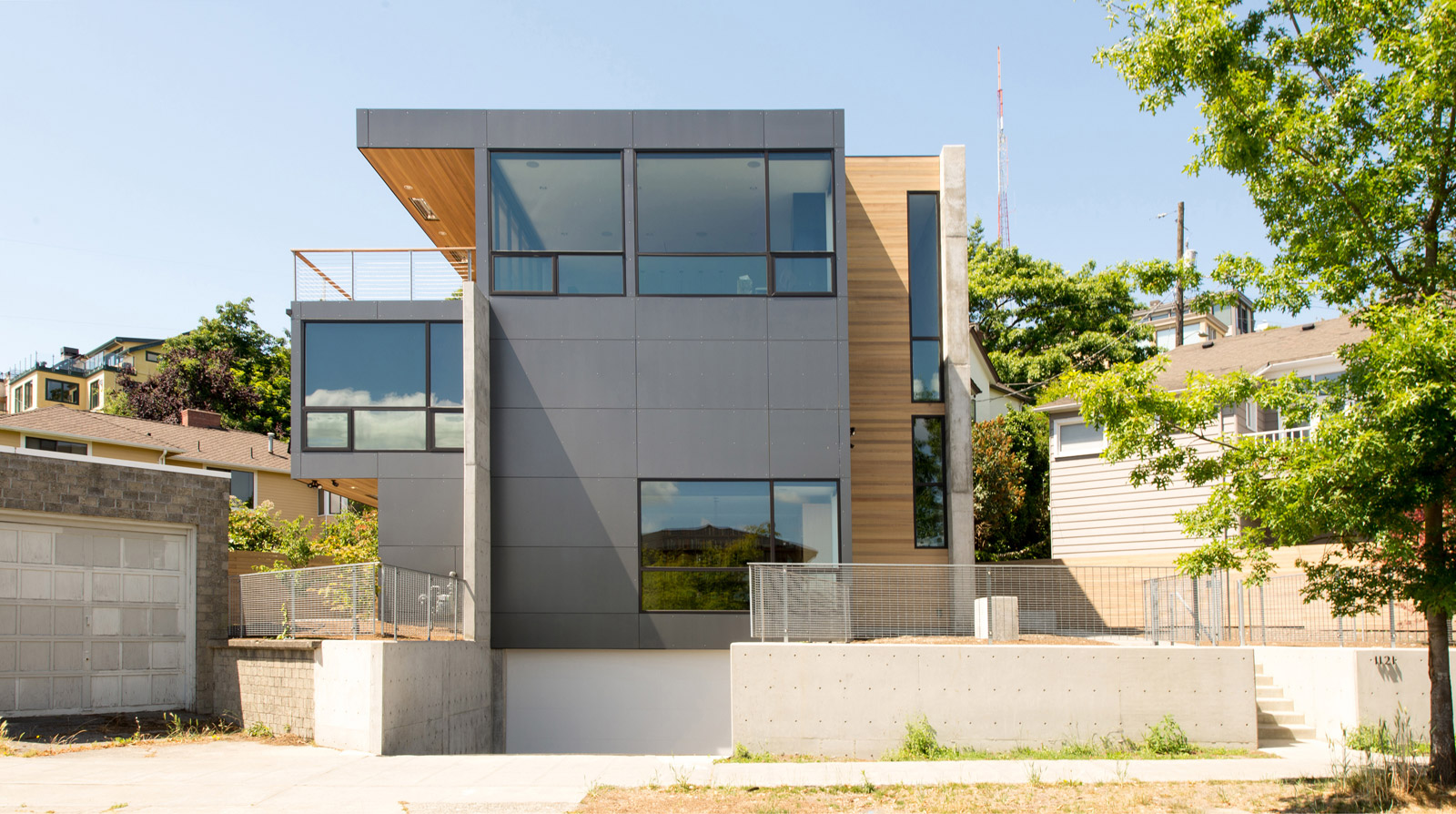
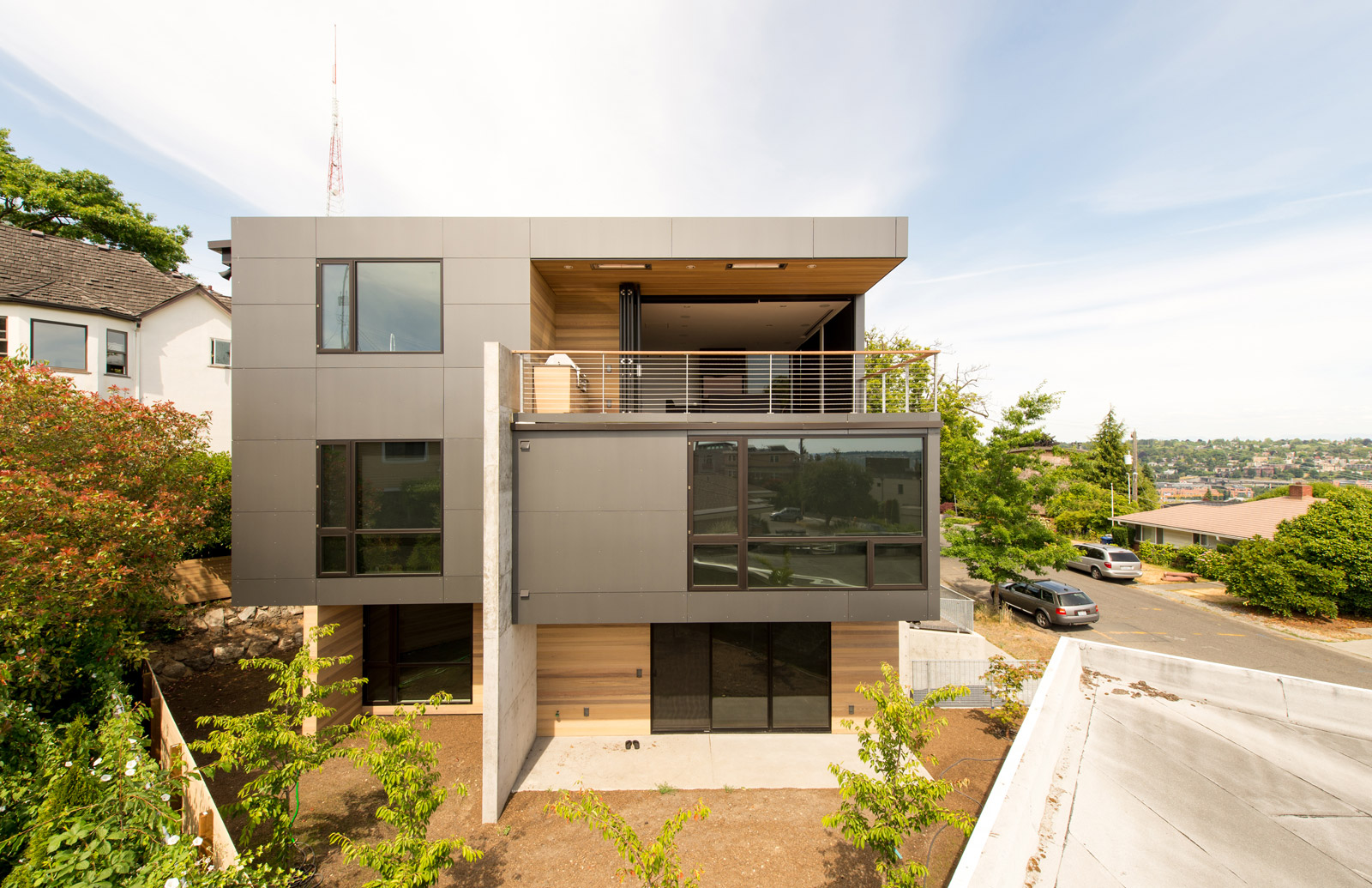
BUILD LLC just completed a new single family residence located on the south slope of Seattle’s Queen Anne Hill. It was a tricky project because of several site constraints and the ever restricting building code provisions. If you follow the BUILD Blog, you know that we love to turn limitations into opportunities for good design, which makes excellent data for today’s post. Here’s the breakdown:

THE CIRCUMSTANCES
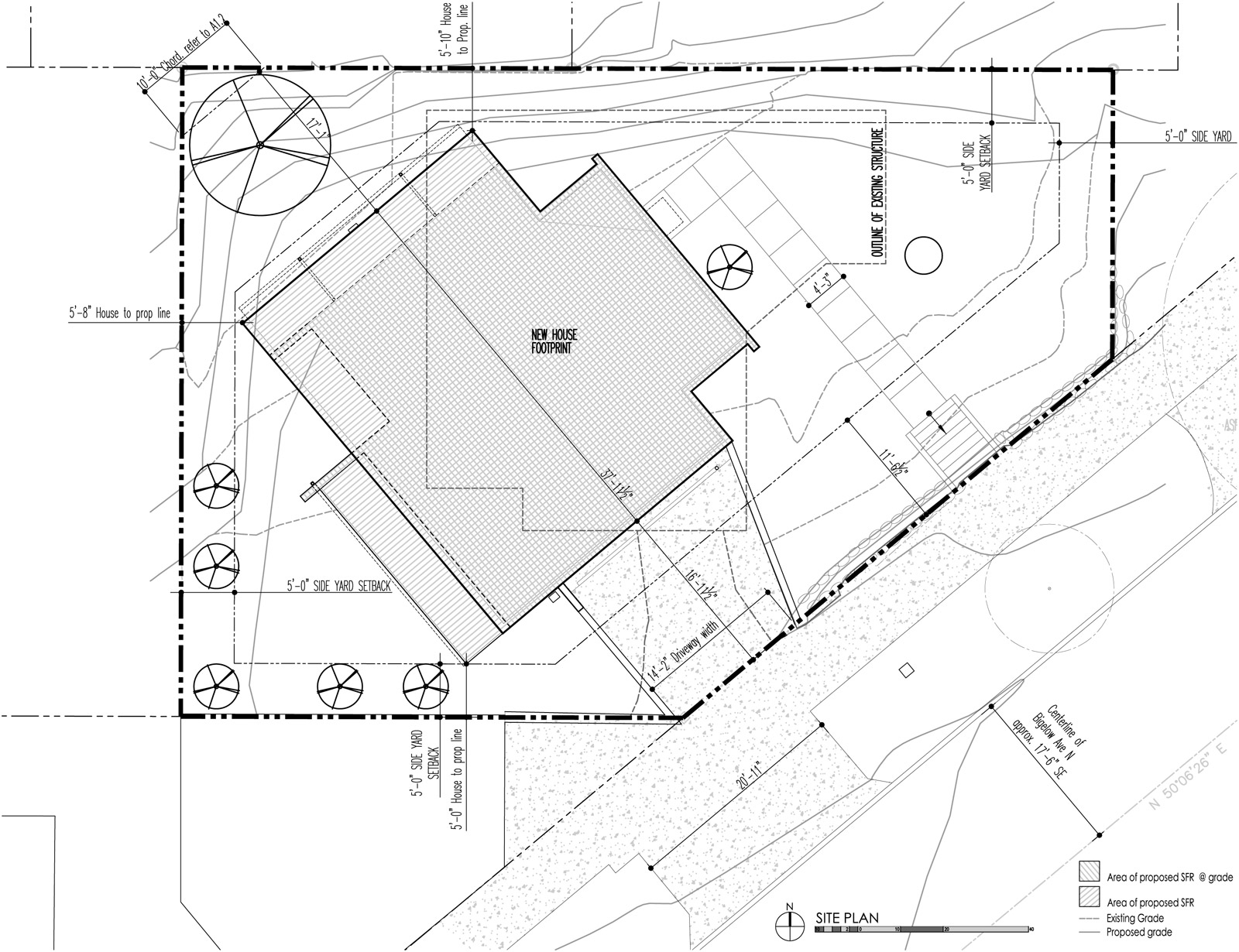
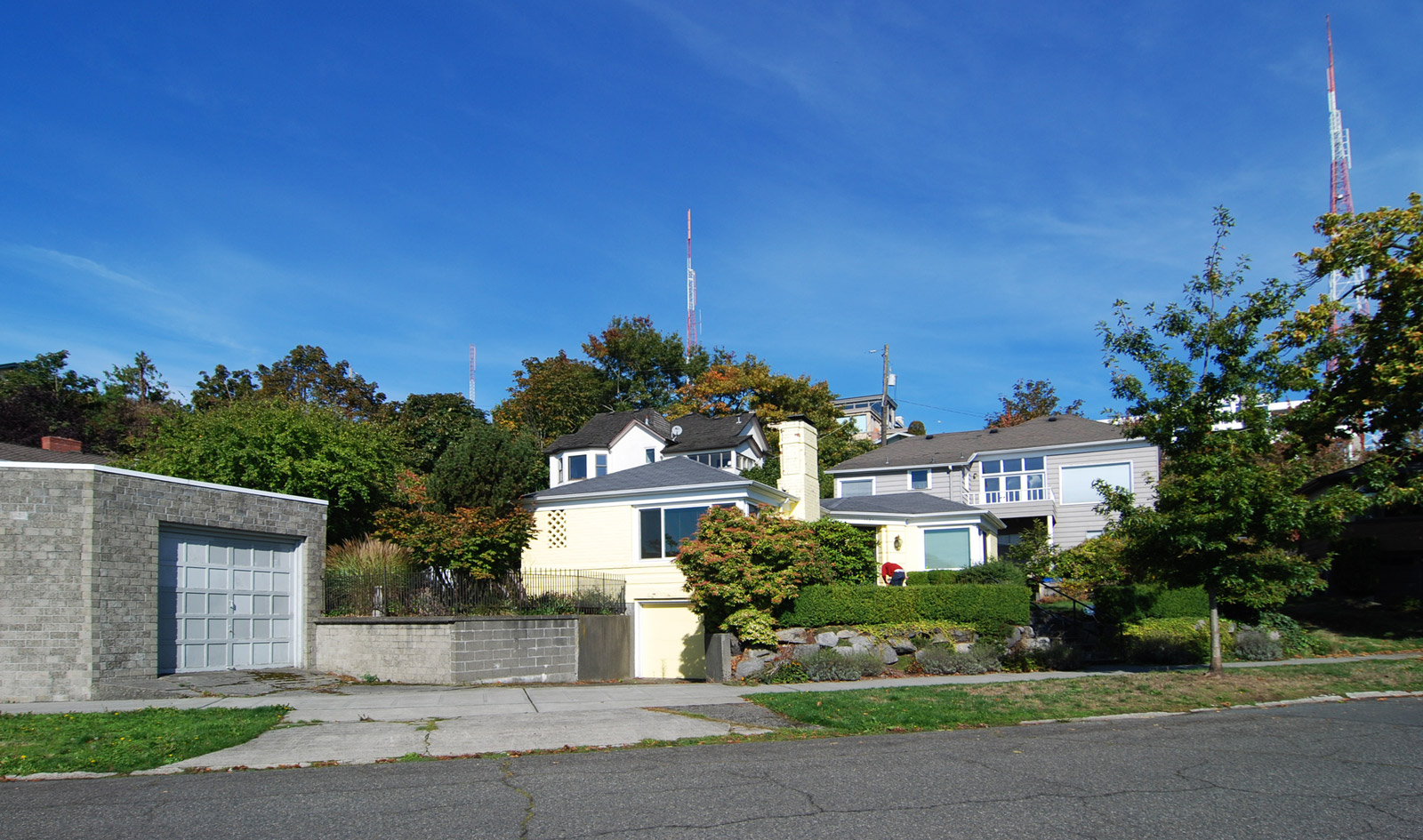
The lot area is a tidy 4,500 square feet with applicable setbacks, leaving a buildable area of 2,843 square feet. There were certain features inherited with the lot, such as the existing curb cut and retaining walls at the south end of the property. An existing and non-conforming concrete masonry unit garage on the adjacent parcel is also tight up to the property line and needed to be considered with the proposed design. Despite these limitations, it was clear that the site had the potential for extraordinary views that the design needed to optimize.
BUILD-LLC-Desai-site-plan

As-built
[Original house on the property]

THE CHALLENGES
Storm water management has become an increasing concern in the Pacific Northwest and stringent building codes limit a proposed residence’s footprint to 1,500 square feet. The footprint of the new structure, along with the sidewalks and driveway is 1,778 square feet and while this is compact we still had an excess of 278 square feet to deal with. To mitigate this overage, we planted additional trees and used a permeable driveway surface, both of which limit the amount of storm water leaving the site without the need for expensive infiltration facilities. These methods maximized the amount of impervious surface area, while keeping the permitting process as simple as possible.
BUILD-LLC-Desai-Ext-West-02B#

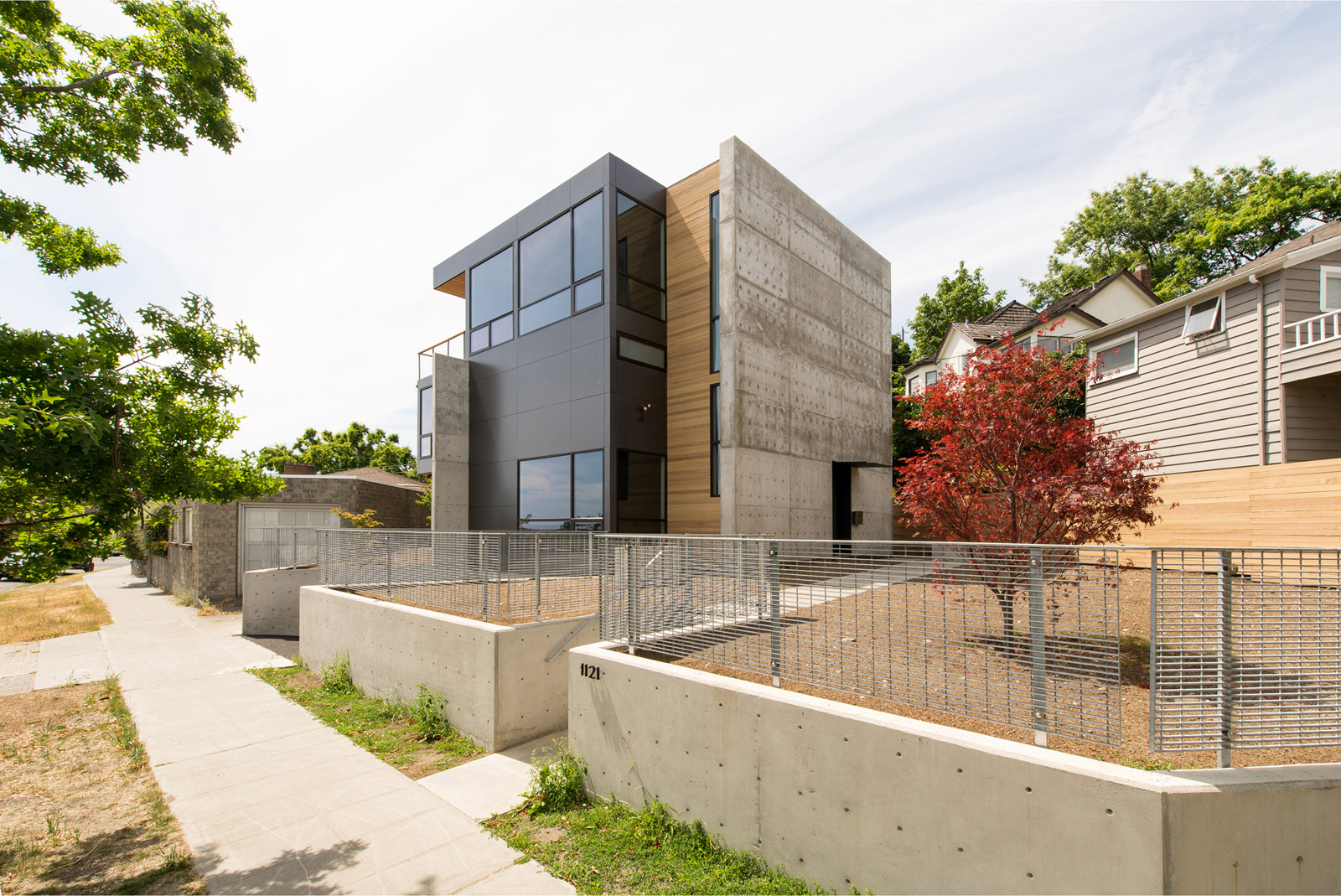
Fitting the necessary functions into a tidy footprint of roughly 1,100 square feet necessitated a structure of four levels and, in many ways, became a game of Tetris (more on this below). Subsequently the 30’ height limit was an important factor in determining the massing of the house.
BUILD-LLC-Desai-Ext-Southeast-03

It’s also worth noting that the median between the property and the street is managed by the Parks Department which required additional permits for use and temporary storage of materials.

THE PROGRAM
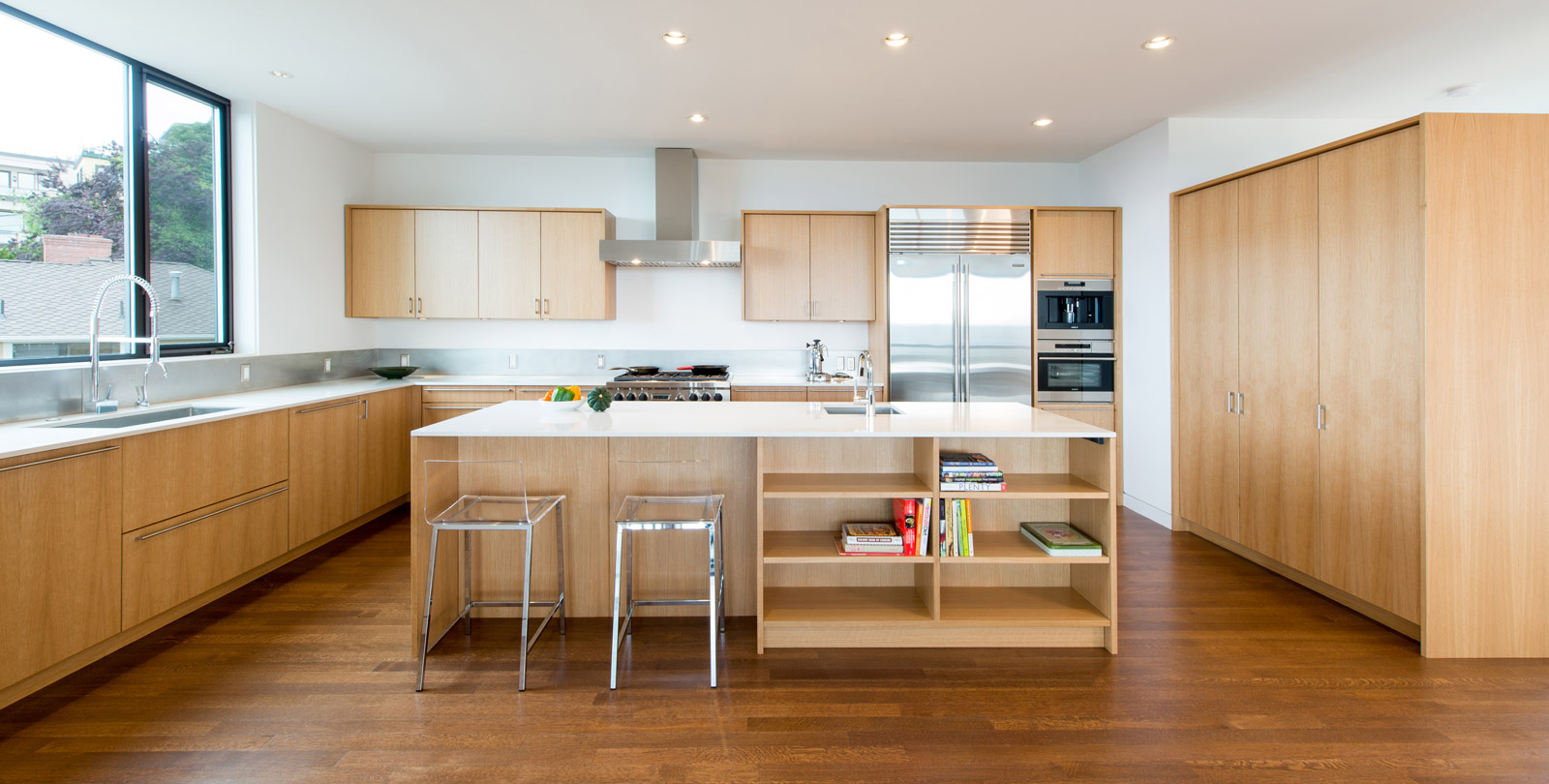
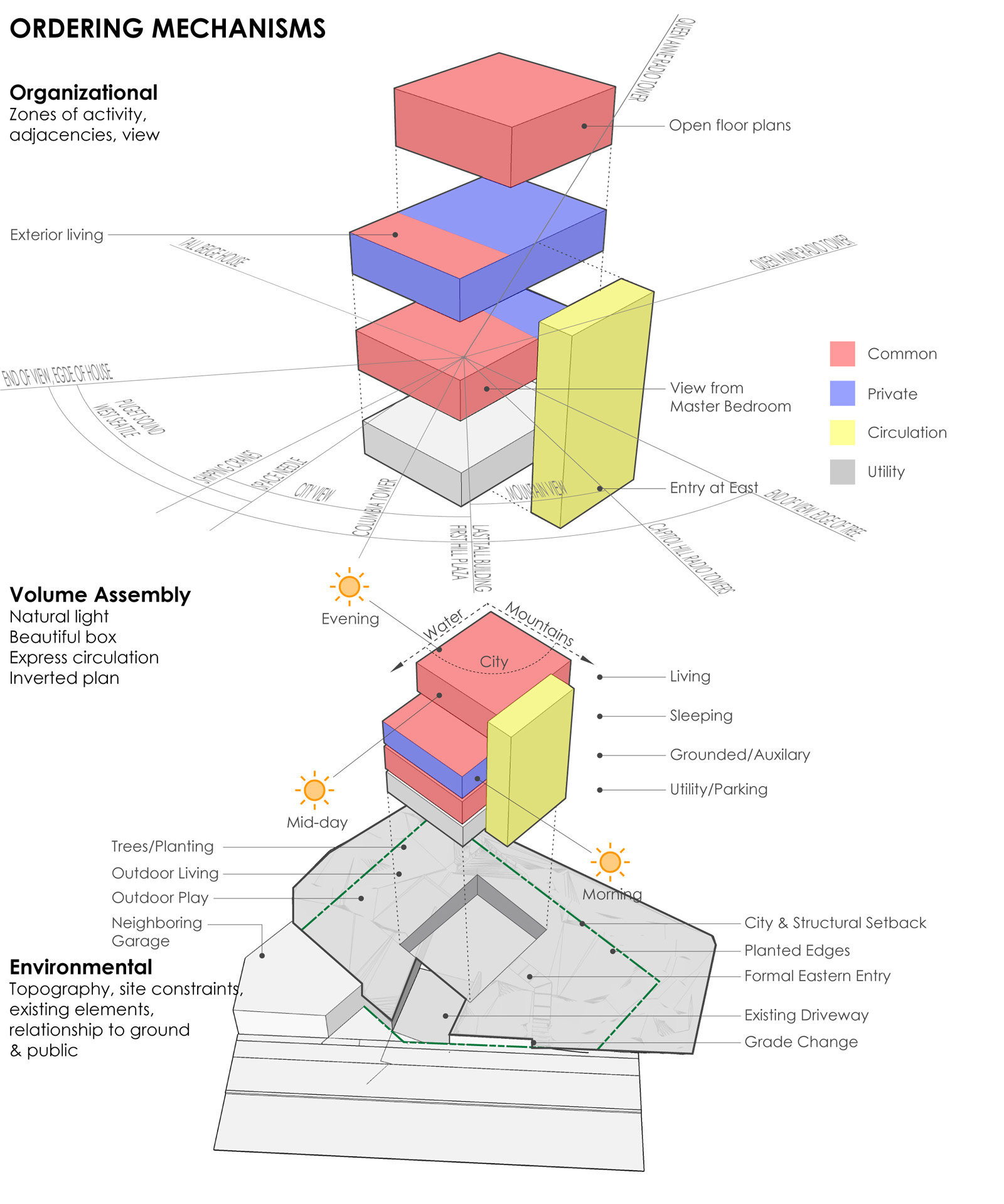
The interior functions include the typical common areas (living room, kitchen, dining room) along with two bedrooms, a master suite, a guest suite, a family room and an office space, in addition to the necessary bathrooms, utility spaces, garage, and circulation requirements. In order to achieve the desires relationships among these different spaces, and maximize the natural light and views, the massing exercise led to a tall, skinny form as illustrated in the study diagram below.
BUILD-LLC-Desai-Diagram

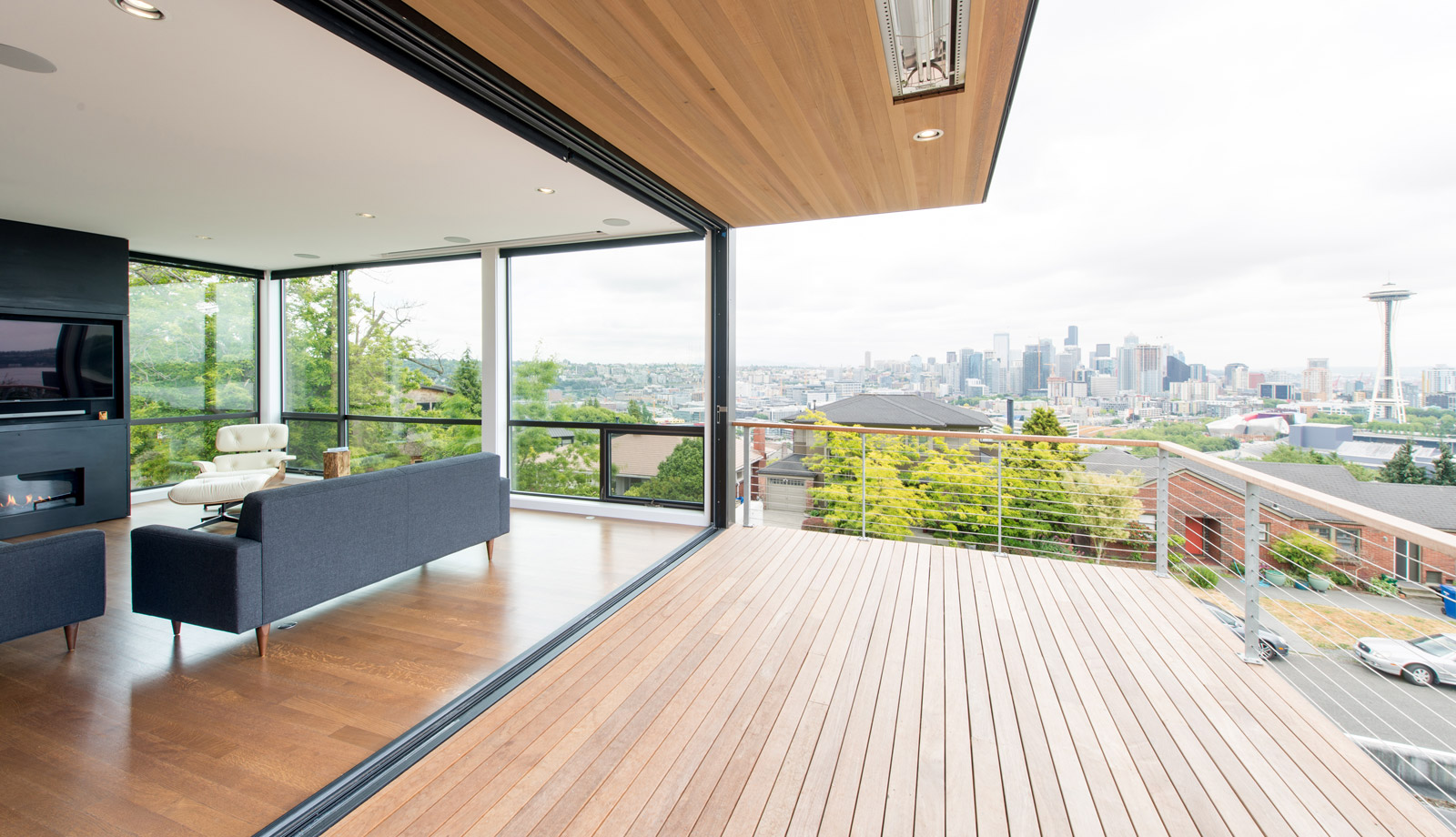
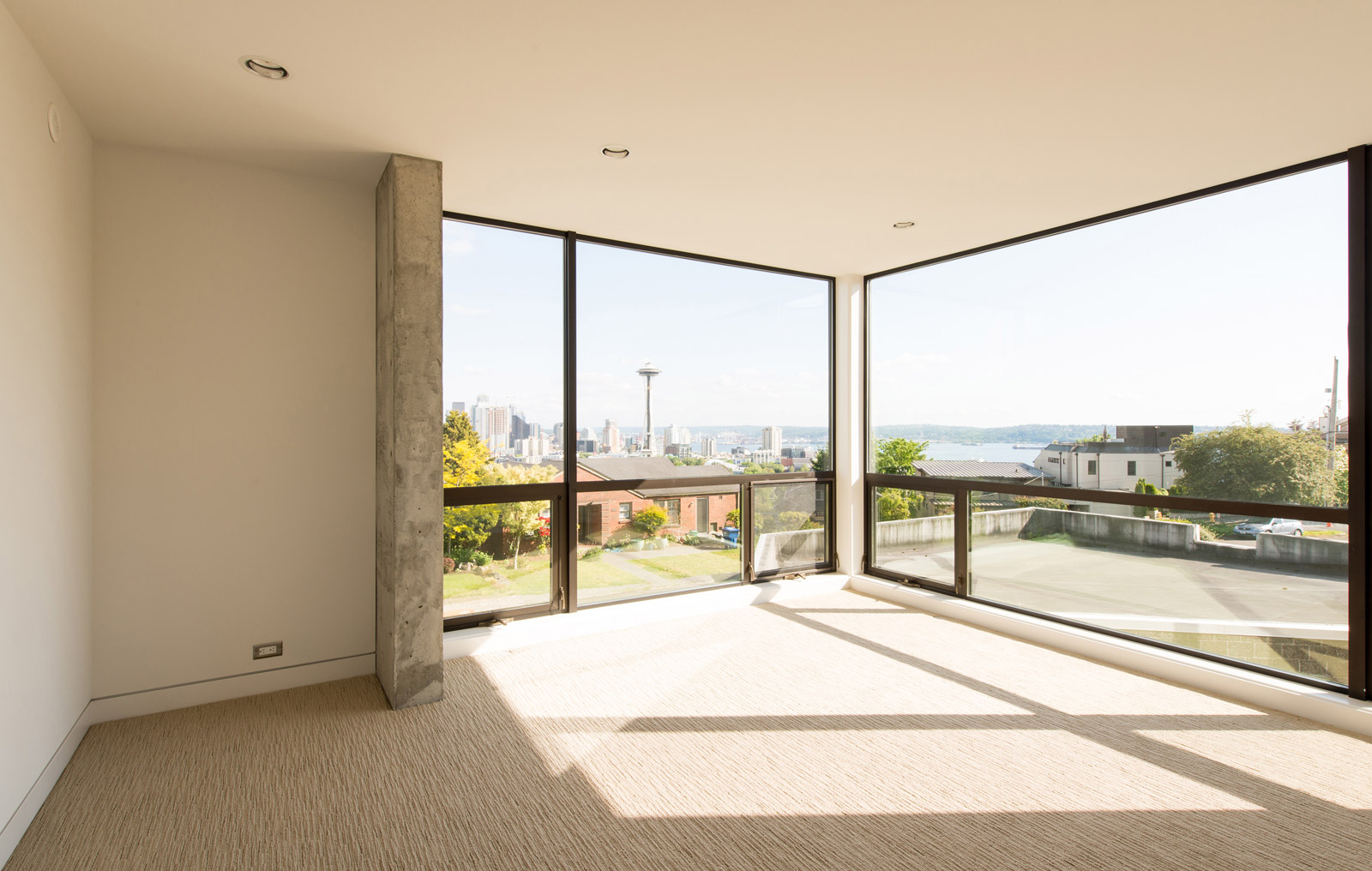
Because the views of Seattle, the Puget Sound, the Cascade Mountains, and Mt. Rainier were important at the common areas, the design uses a reverse floor plan. The living, kitchen, and dining areas are organized on the top floor, while the bedrooms and more private areas of the house reside on the 2nd and 3rd floors with the basement and utility spaces below grade.
BUILD-LLC-Desai-Int-Living-03#

BUILD-LLC-Desai-Int-Dining-05#

BUILD-LLC-Desai-Int-Kitchen-05#

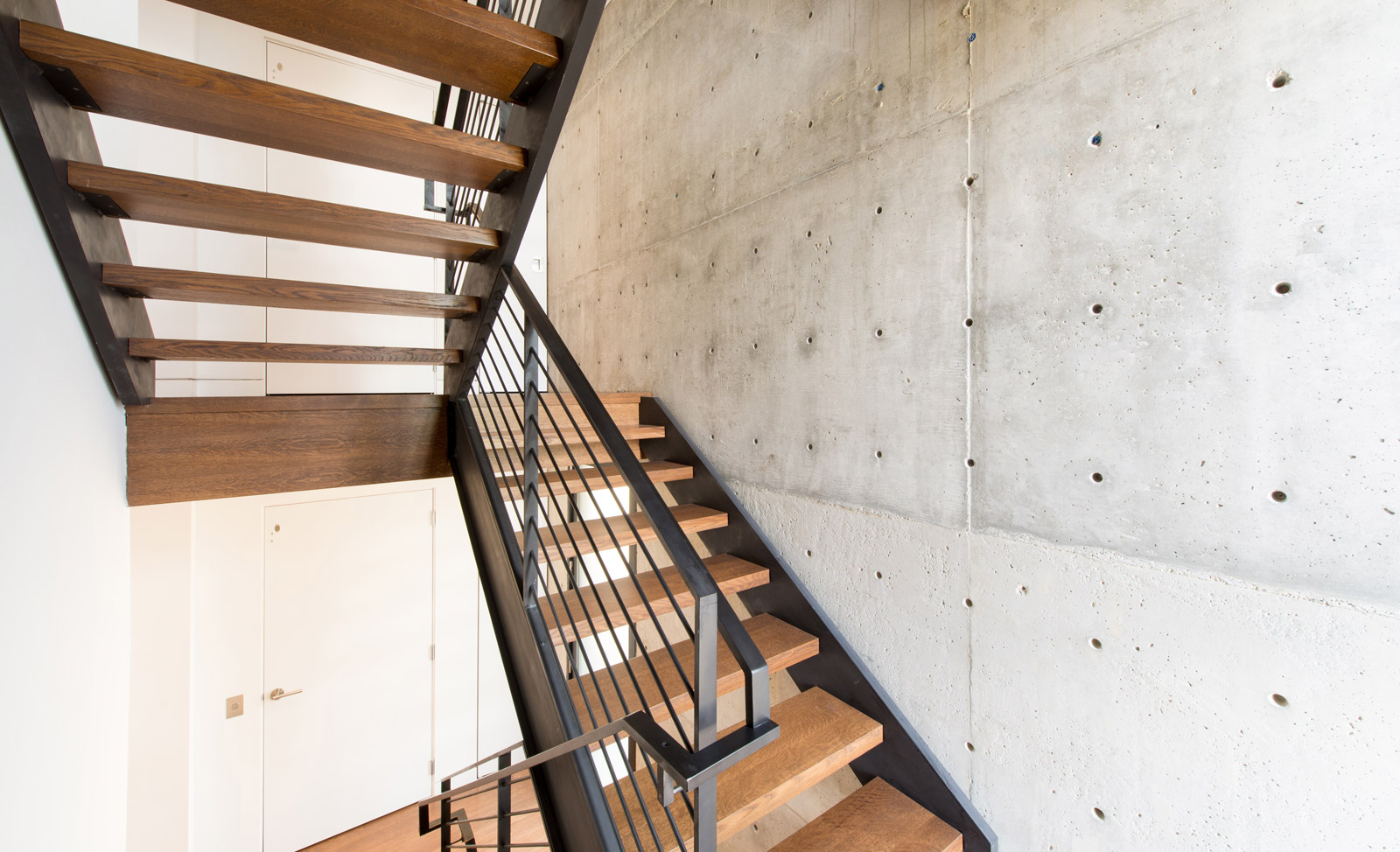
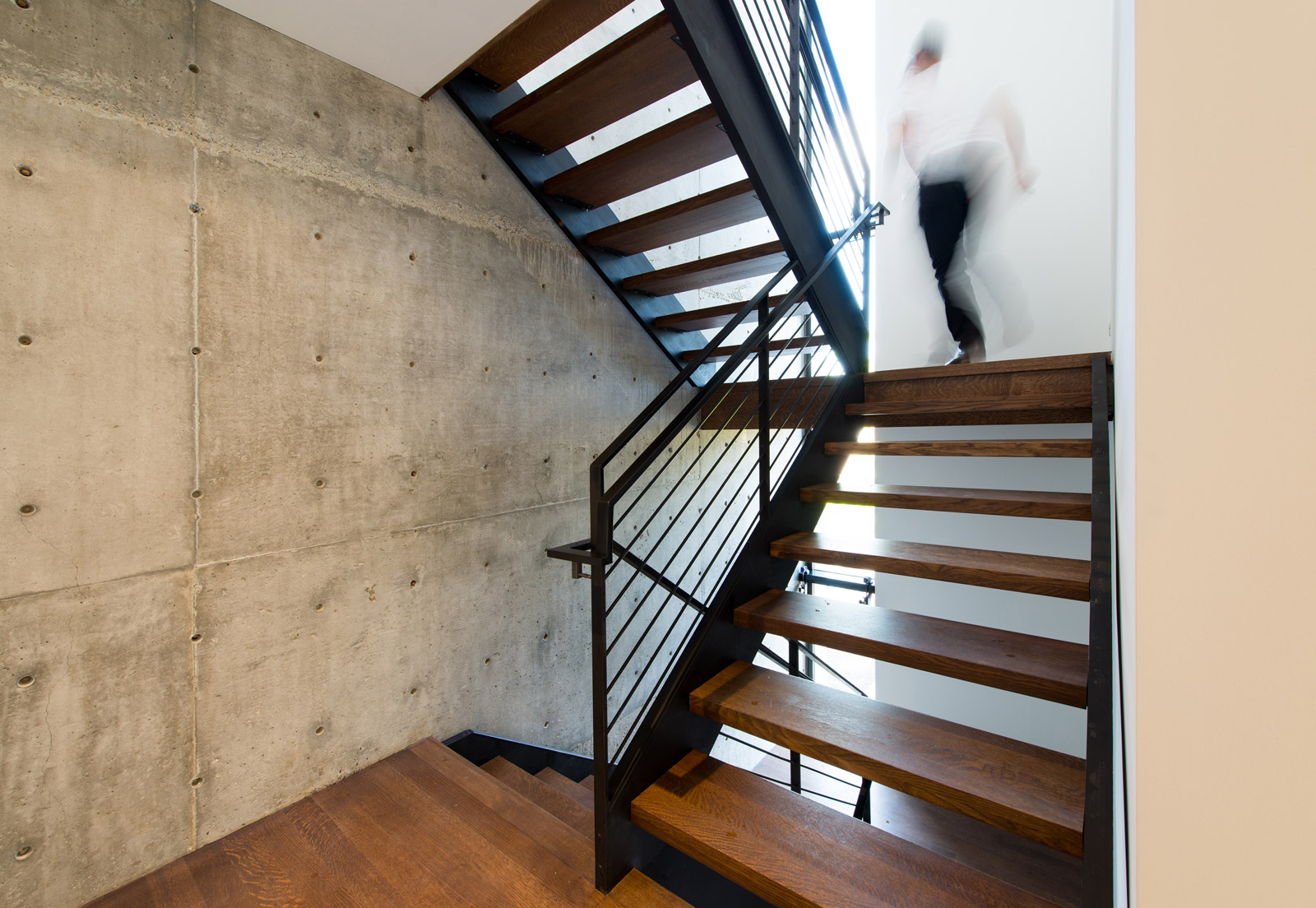
In order to efficiently serve each of the four floors, a dedicated circulation core at the north contains all of the vertical circulation. The biggest challenge of the reverse floor plan is reaching the kitchen from the garage with groceries, kids, and everything else included with the family of four lifestyle. A small residential elevator solves this issue by providing quick and easy access from the basement to the top floor.
BUILD-LLC-Desai-Int-Stair-17#

BUILD-LLC-Desai-upper-floor-plan

DESIGN CONCEPTS
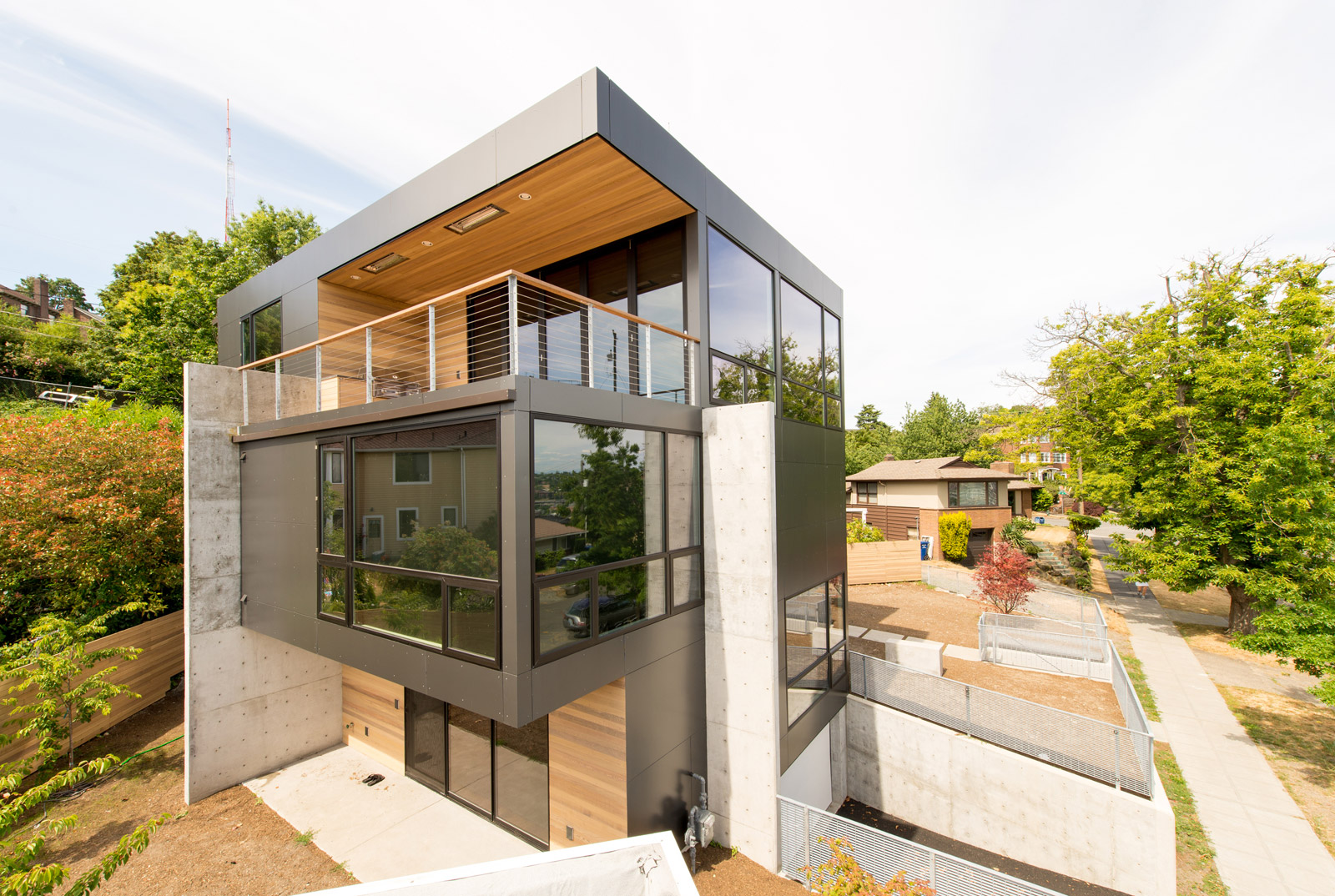
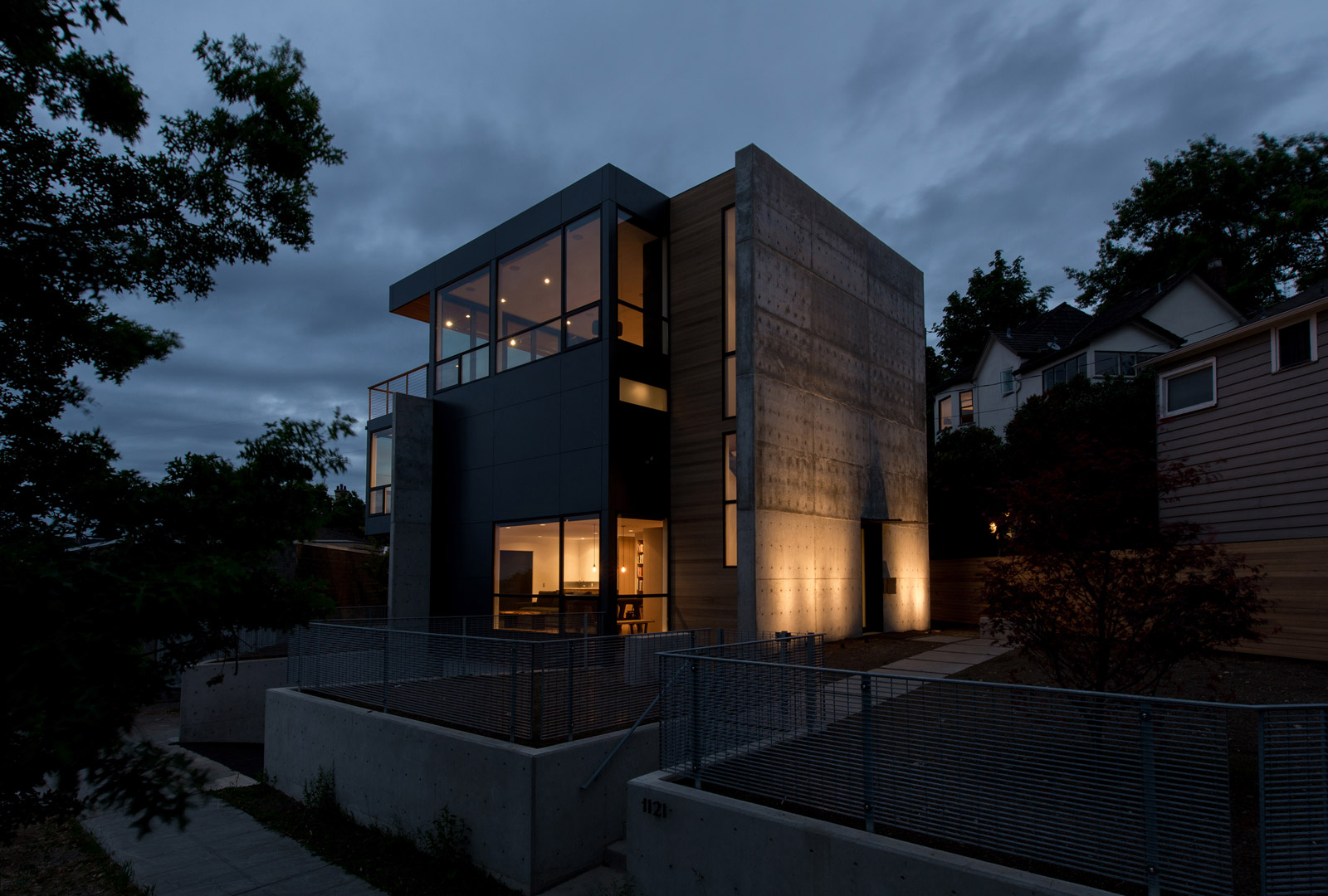
The stacked program of this residence is both unique and intricate, allowing the envelope to take significant design cues from the interior functions. In other words, the house looks like what it’s doing.
BUILD-LLC-Desai-Ext-Southwest-06#

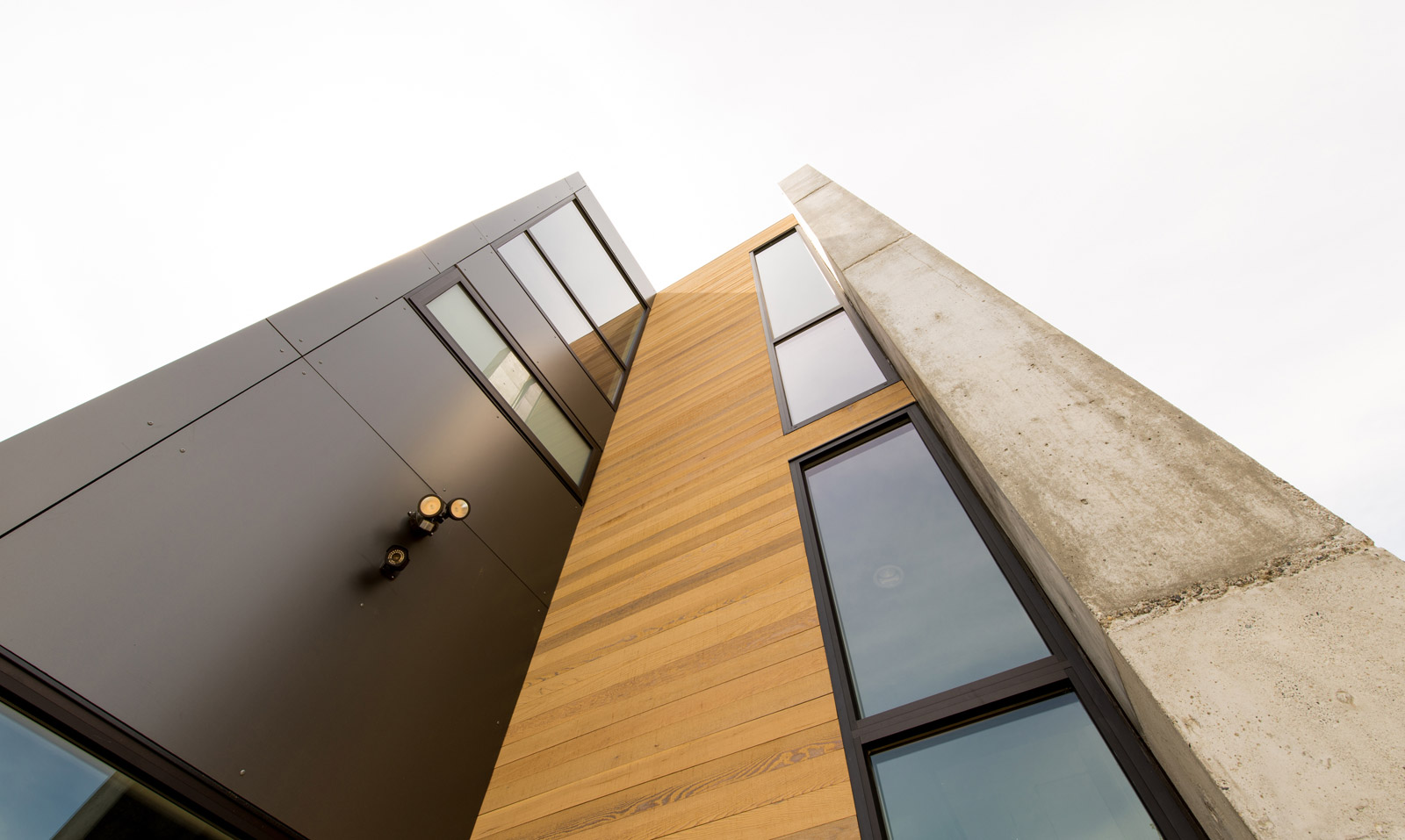
Three primary materials are used at the envelope. The solid masses are enhanced with aluminum rainscreen panels and the windows are bronze anodized aluminum. This darker tone allows the warm cedar to pop at the circulation core and the recesses below cantilevers. Prominent walls within the house were formed in concrete and extended beyond the envelope out into the landscaping. At the north elevation of the structure, a 30’ tall concrete wall bookends the structure, provides a dramatic entry point, and serves as a backdrop to the landscaping.

BUILD-LLC-Desai-Ext-Northwest-03

Inside, the concrete walls play an important role adding texture to the interior material palette and enhancing the connection to the exterior.
BUILD-LLC-Desai-Int-Master-Bed-01

The stairway provides a peek to the view beyond via a vertical slot window. Stair climbing visitors are rewarded at the top as the common areas open up and provide stunning views of city, mountains, and sea.
BUILD-LLC-Desai-Int-Stair-05g

QUANTITIES
The cost of the home came in at $255 per square foot. For a detailed analysis of how this number is computed, we highly recommend taking a spin through our residential construction budget cheat-sheet. With the booming real estate market here in Seattle we estimate that the project has already established (or exceeded) its market value. From start to finish the construction took approximately 11 months.
BUILD-LLC-Desai-Ext-Southeast-05#

RESOURCES
Aluminum rainscreen panels manufactured by Oculus
Bronze anodized aluminum windows by Marlin and supplied by Goldfinch Brothers
Accordion door by La Cantina
Rift and quartered white oak flooring with Swedish finish and gray stain by Olde English Hardwoods, Inc.
Single-ply PVC roofing by Esary Roofing and Siding
Concrete work and framing by Modern Shelter
Plumbing fixtures supplied by Keller Plumbing Supply
Interior steel work by Modern Metal Works llc
Interior glass by Herzog Glass
Appliances by Metropolitan Appliance
Tile by Pental
Elvoron residential elevator by Garaventa Lift
BUILD-LLC-Desai-Ext-Southeast-16#

Thanks for following the coverage on the Desai Residence. Stay tuned for additional posts on the details, specifications, and design strategies behind this project.

Cheers from Team BUILD